



PROGRAM & INITIATIVES
Assessment and Certification
Artificial Intelligence Safety, Trust & Responsibility
PROGRAM & INITIATIVES
AI STR Certification
Artificial Intelligence Safety, Trust & Responsibility
Artificial Intelligence Safety, Trust, and Responsibility (AI STR) Certification is a global program created by the World Digital Technology Academy (WDTA) based on the WDTA AI STR international standards. It provides a clear framework for ensuring that AI systems are secure, trustworthy, and responsibly governed.
The certification assesses both technical safeguards and ethical and legal compliance, helping organizations manage risks such as data protection, fairness, and broader societal impact. Achieving AI STR Certification demonstrates a commitment to responsible AI and strengthens trust with users, partners, and regulators. The program supports the global development of AI that is safe, transparent, and aligned with public interest.
AI Application
Evaluating and validating the performance of generative artificial intelligence (GenAI) applications in terms of safety, trust, and accountability
Large Language Model
Establish rigorous security standards and evaluation procedures to ensure large language models resist adversarial attacks, reduce risks, and promote responsible use.
AI Agent
The types of agent risks were further categorized, and testing methods such as model inspection, network communication analysis, and tool fuzz testing were improved and innovatively proposed.
PROGRAM & INITIATIVES
Generative AI Application Security Certification
The Generative AI Application Security Certification is conducted based on the WDTA AI STR-01 standard.
PROGRAM & INITIATIVES
Certification Basis
WDTA AI STR-01 Generative AI Application Security Testing and Validation Standard
Generative AI Application Security Testing and Validation Standard
Target
Applications built on generative artificial intelligence (from LLM to GenAI)
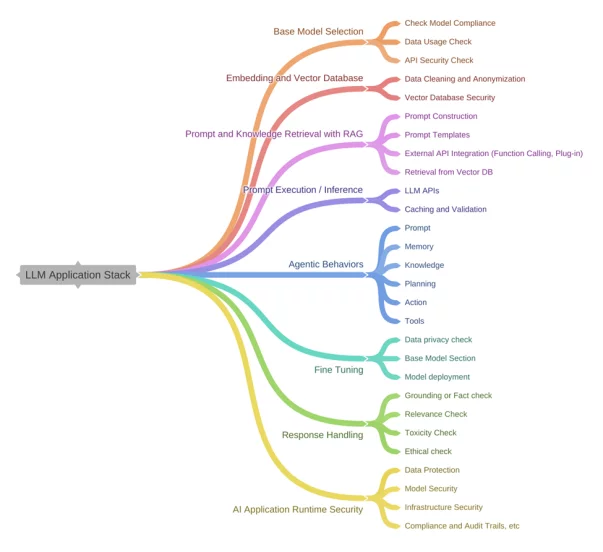
This certification addresses key areas:
PROGRAM & INITIATIVES
Large Language Model Security Certification
Based on the WDTA AI STR-02 Large Language Model Security Testing Method

PROGRAM & INITIATIVES
Certification Basis
WDTA AI STR-02 Large Language Model Security Testing Method
Target
Large Language Models
Large Language Model Security Testing Method
PROGRAM & INITIATIVES
Value of LLM Security Certification
Enhancing Security and Reliability
Through rigorous security testing and evaluation, enterprises can identify and repair potential vulnerabilities in large language models, significantly improving the overall security and reliability of the models and reducing the risk of adversarial attacks.
Reducing Operational Risks
Through systematic security detection and protective measures, enterprises can effectively reduce operational risks caused by model security issues, avoiding potential economic losses and brand damage.
Promoting Responsible Use
Helps organizations consider social impact and ethical issues more thoroughly when designing and deploying AI systems, thereby promoting the responsible use of AI technology.